Removing Obstacles Before Construction Begins
Land Clearing in Springfield for properties covered by brush, trees, and debris that block access or building areas
C & R Concrete and Excavation LLC clears land by removing vegetation, trees, stumps, and debris so property owners and builders can access the site and begin grading or construction. You need land clearing when your lot is overgrown, when trees block the footprint of a planned structure, or when you want to open up space for driveways, yards, or site development. The company works on residential properties throughout Springfield, Oregon, where wooded or overgrown lots often require clearing before any other site work can proceed.
Land clearing involves cutting down trees, grinding or removing stumps, and hauling away brush and limbs. The crew uses chainsaws, excavators with grapple attachments, and loaders to clear vegetation and pile debris for removal or disposal. When clearing is complete, the site is accessible to equipment, and the ground is ready for grading or excavation without obstructions that would delay construction or prevent accurate site layout.
If your property has dense vegetation or large trees in the building area, a site evaluation will help determine clearing limits and disposal methods for the material removed.
How Land Clearing Opens Up Property
The crew starts by marking trees and vegetation to be removed based on site plans or property boundaries. Trees are felled in controlled directions, and limbs are cut and stacked. Stumps are either ground below grade or excavated and removed, depending on what will be built over the cleared area. Brush and smaller vegetation are loaded into trucks or chipped on site, and the cleared area is left ready for grading or further site preparation.
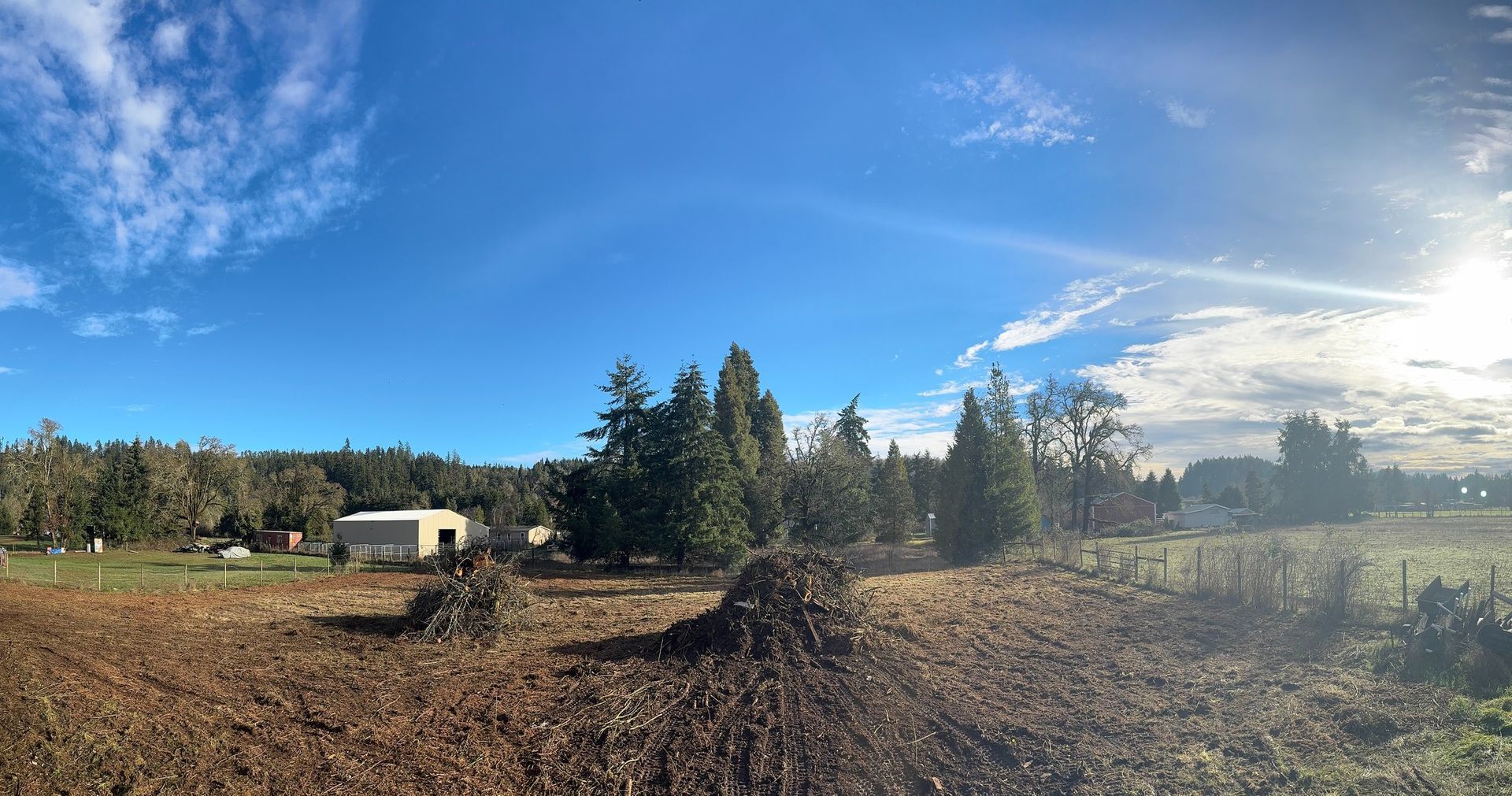
After clearing, you will see open ground where dense brush or trees once stood, clear sightlines across the property, and room for equipment to move and work without obstruction. C & R Concrete and Excavation LLC coordinates clearing with other site work so the property is ready for the next phase of construction or development without delays caused by remaining vegetation or debris piles.
Clearing work does not include grading, utility installation, or erosion control measures. The crew removes vegetation and debris but does not reshape the ground or address drainage. If the property has slopes or wetland areas, additional permits or erosion control may be required before clearing can begin.
Land clearing projects vary depending on tree density, property size, and disposal requirements, so the crew evaluates the site and discusses project scope before scheduling work.
What You Need to Know About Clearing
What happens to cleared trees and brush?
Larger logs may be cut for firewood or hauled away, while brush and limbs are typically chipped or loaded for disposal at an approved site.
How are stumps handled after trees are removed?
Stumps can be ground to several inches below grade or fully excavated. Grinding is faster and less invasive, while excavation removes the entire root ball and allows for immediate grading.
When is land clearing required before building?
Clearing is necessary when vegetation occupies the building footprint, blocks access routes, or interferes with site grading and excavation work.
Why does clearing need to happen before site preparation?
Removing trees and brush allows grading equipment to reach the ground and establish accurate elevations without obstructions that would prevent proper leveling or compaction.
How long does clearing take in Springfield?
Most residential lots are cleared in one to two days, depending on tree size, density, and whether stumps are ground or removed.
C & R Concrete and Excavation LLC provides free estimates that outline clearing scope, disposal methods, and timing, so you can plan the early stages of site development and coordinate clearing with grading or construction schedules.