Preparing Ground for Construction to Begin
Excavation Services in Springfield for building foundations and site grading before concrete installation
C & R Concrete and Excavation LLC operates excavation equipment to dig foundations, trenches, and grade building sites so construction crews can work on stable, properly prepared ground. You need excavation when starting a new home, pouring a foundation, installing underground utilities, or leveling a site that currently slopes or holds standing water. The company works with residential property owners and contractors throughout Springfield, Oregon, coordinating dig schedules and site access to keep projects moving without delay.
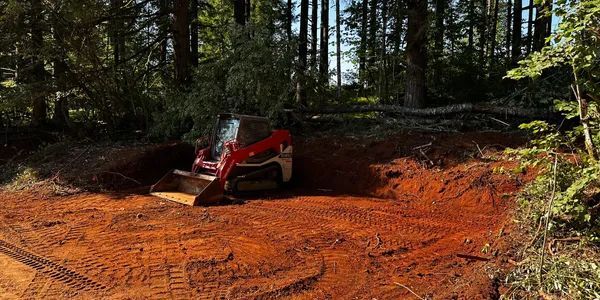
Excavation removes soil to a specified depth and grade, creating a level base or a formed cavity for concrete placement. The crew uses tracked equipment to reach accurate elevations, remove unsuitable material, and compact subgrade layers. When excavation is done correctly, water drains away from the structure, footings rest on stable soil, and the site is ready for forming and pouring without settlement or shifting.
If you are planning construction that requires foundation work or grading, the crew can evaluate soil conditions and site access to estimate equipment needs and dig timelines.
What Happens During Site Excavation
The operator marks the dig area based on site plans, then removes topsoil and unsuitable material until reaching stable subgrade. Depth and slope are checked with a laser level or grade stakes to ensure accuracy. Trenches are dug for footings or utilities, and the base is compacted in lifts to prevent future settling. If ledge or oversized rock is encountered, the crew adjusts equipment or methods to maintain the project schedule.
Once excavation is complete, you will see a level surface where there was uneven ground, a defined trench where footings will be poured, and a site that allows concrete trucks and form crews to work without obstruction. C & R Concrete and Excavation LLC coordinates with builders to ensure excavation matches foundation dimensions and that grading directs water away from the structure as intended.
Excavation also uncovers subsurface conditions that may not be visible before digging. If the crew finds ledge, high groundwater, or clay layers that affect drainage, they communicate those findings so adjustments can be made before concrete placement. Spoil material is stockpiled on site or removed, depending on the project plan and available space.
Excavation timing and methods vary depending on site size, soil type, and project requirements, so the crew reviews plans and site access before scheduling work.
Common Questions About Excavation Work
What equipment is used for residential excavation?
Most jobs use a tracked excavator with a grading bucket for digging and a skid steer for fine grading and compaction. Larger projects may require a dozer for clearing or grading.
How deep do foundation excavations need to be?
Foundation footings in Springfield typically rest at least 18 inches below grade to reach stable soil and stay below frost depth.
When does excavation need to be rescheduled?
Work is postponed when the site is too wet to support equipment or when heavy rain would cause trench collapse or subgrade instability.
Why is compaction necessary after excavation?
Compaction removes air pockets and increases soil density, preventing settlement under the weight of concrete or structures built on top of the excavated area.
How is spoil material handled?
Excess soil is either spread on site for grading or hauled away, depending on the volume and whether the property has space for redistribution.
How do you ensure underground utilities aren’t damaged during excavation?
Before any excavation begins, we contact 811 to have all underground utilities professionally located and marked.
C & R Concrete and Excavation LLC provides free estimates that cover dig depth, equipment needs, and site preparation steps, so you and your builder can plan the excavation phase with accurate information and realistic timelines.